

 Deutsch
 Korean
How Do Glass HMIs Become Robust?

Ingress Protection vs. Protection Class: Designing Robustness in HMI Development
In the development of modern Human-Machine Interfaces (HMIs), safety plays just as important a role as design and functionality. Two technical terms frequently come up: ingress protection (IP rating) and protection class.
Both define how well a device is protected – either against environmental influences or electrical hazards – but they describe fundamentally different aspects.
This article explains the difference and highlights why both are critical when developing customized HMI solutions for applications such as building automation, industrial environments, or medical technology.
What Is an IP Rating (Ingress Protection)?
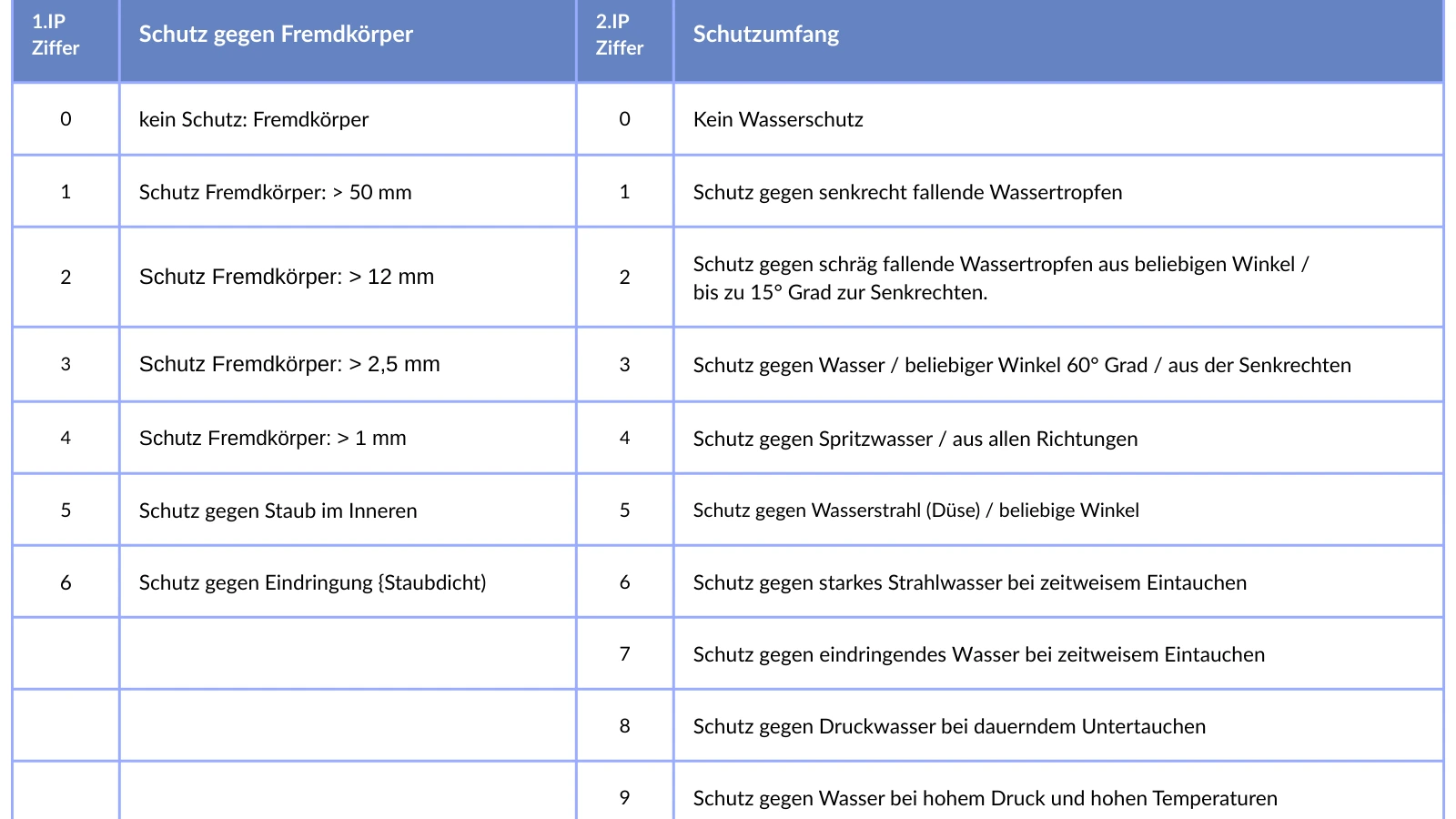
The IP rating describes how well a device is protected against the ingress of solid objects (e.g. dust, dirt) and liquids (e.g. water).
An IP rating consists of two digits, for example IP65:
The first digit indicates protection against solid objects
The second digit indicates protection against water
Example: IP65 = dust-tight (6) and protected against water jets (5)
What Is a Protection Class?
The protection class defines the electrical safety of a device and how it is protected against electric shock. It is fundamentally different from the IP rating.
The most important protection classes are:
- Protection Class I:Devices with protective earth connection (grounded), Examples: refrigerators, electric stoves, washing machines
- Protection Class II: Devices with double or reinforced insulation, Examples: power tools, personal care devices
- Protection Class III: Devices operated with extra-low voltage (SELV), Examples: medical devices, industrial equipment, devices used in wet environments or toys
IP Protection Class Quelle: Wikipedia
The Difference at a Glance
While the IP rating describes protection against environmental influences such as dust and water, the protection class defines electrical safety.
Both systems complement each other and are essential for safe operation and product certification.
Why This Distinction Matters
In practice, IP rating and protection class are often confused – which can lead to serious risks.
A device may have a high IP rating but still be unsafe if it lacks proper electrical protection. Conversely, strong electrical insulation does not protect against moisture ingress.
???? Only the combination of both ensures maximum safety and reliability.
Relevance for Custom HMI Development
In HMI development, IP rating and protection class are key design parameters and often defined as core requirements in project specifications.
They influence:
- Safety and compliance
- Design flexibility
- Material selection
- Manufacturing costs
Industry-Specific Requirements for HMIs
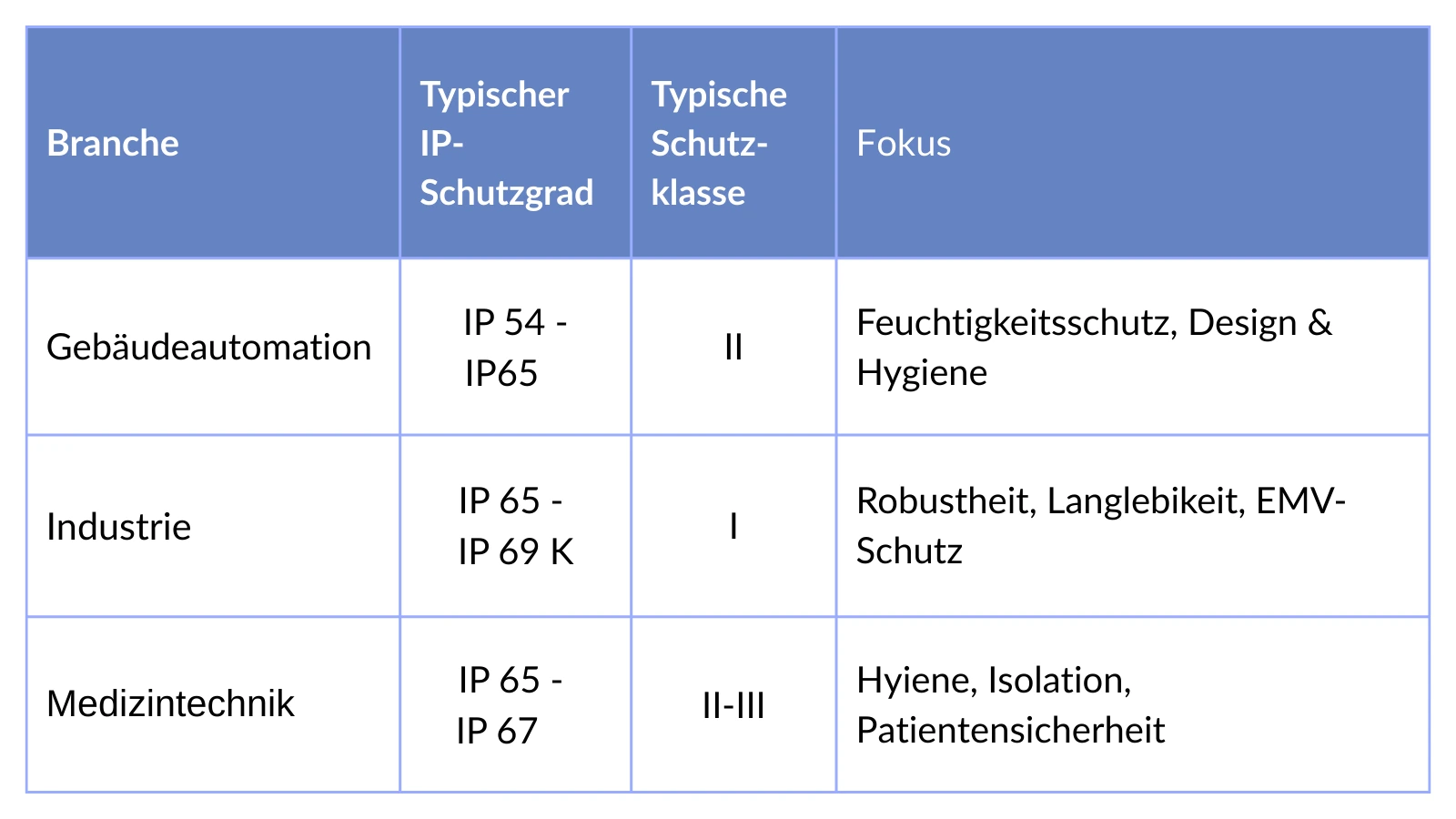
Building & Building Automation
HMI systems in buildings must withstand moisture, cleaning agents, and temperature fluctuations.
Typical requirements:
- IP54–IP65 for splash protection
- Protection Class II for non-grounded devices
- Glass surfaces for hygiene and design
Incorrect specifications can lead to moisture damage or system failures, for example in smart home controls.
Industrial Applications
In industrial environments, HMIs are exposed to dust, oil mist, and cleaning processes.
Typical requirements:
- IP65 to IP69K
- Protection Class I
- High resistance to impact and chemicals
These factors are essential to ensure reliable operation in production environments
Medical Technology
Medical applications are subject to strict standards such as IEC 60601.
Requirements include:
- Easy-to-clean and disinfectable surfaces
- High electrical safety
- IP65 or higher
- Protection Class II or III
Capacitive glass surfaces reduce contamination risks and improve hygiene.
Safety Starts in the Design Phase
The correct combination of IP rating and protection class is not just a formal requirement – it is essential for reliable HMI systems.
Protection strategies should be defined early in the design phase, tailored to the specific application, environment, and user requirements.
At EVYTRA, protection is considered an integral part of the design: functionality, safety, and aesthetics form a unified solution.
Need Support for Your HMI Application?
Not sure which protection concept fits your application and environment?
EVYTRA supports you in developing customized HMI solutions that combine performance, safety, and design.
???? Get in touch with us – we’re happy to support you.